The Real Risks of AI and Our Kids Episode
Sep 30, 2026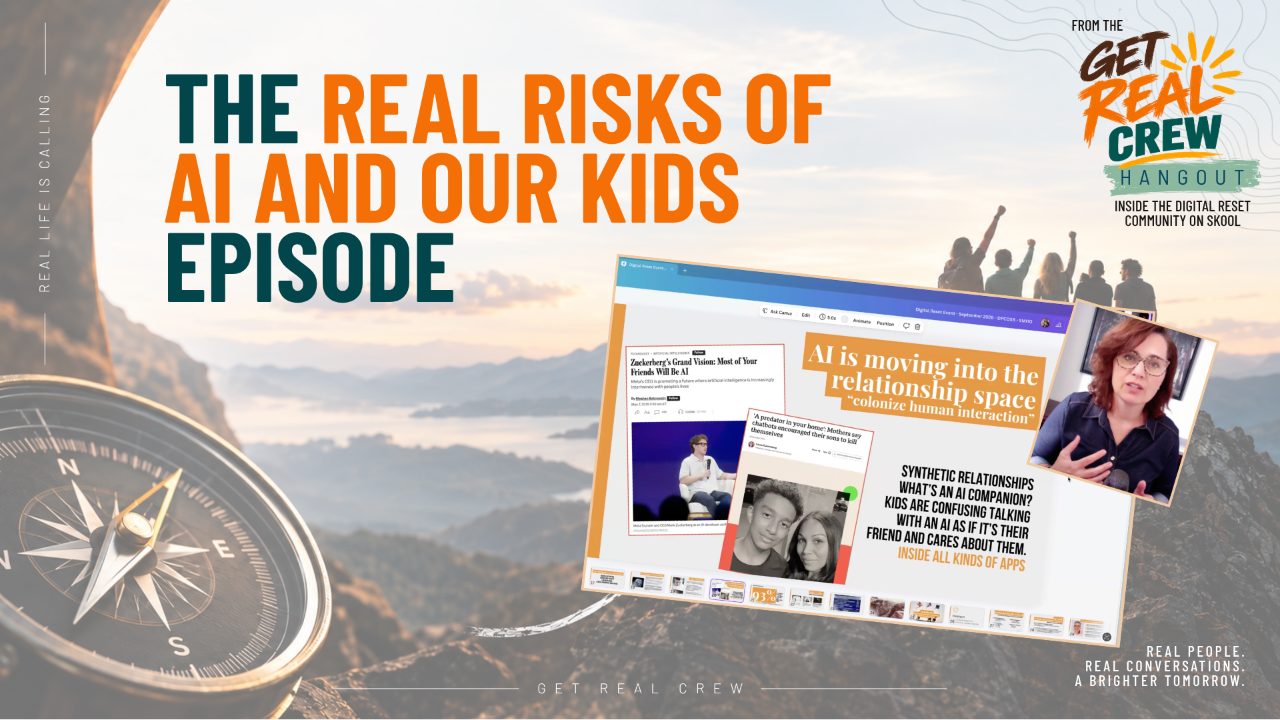
I spent 25 years in marketing. I know what it looks like when a product is built to capture attention and keep it. So when the research on social media and kids started coming out, I didn't just see a parenting problem. I saw a playbook I recognized. It's the tobacco industry in the 90s all over again!
Now that playbook has a new tool: artificial intelligence. In this episode, I walk through what's already happening to our kids, what's coming next with AI, and the simple, powerful ways we as parents can protect them.
Watch here...
Built to hook them
Let's start with the hard truth. The apps and devices our kids use every day are not neutral tools. They are designed to be addictive. Endless scroll, autoplay, streaks and notifications all exist for one reason: to keep eyes on screens for as long as possible.
We've seen this before. For decades, the tobacco industry used clever marketing to make a harmful product feel normal, cool and harmless. They knew what it was doing to people, denied the harms and sold it anyway. The parallels with today's technology are hard to ignore. Once you see it, you can't un-see it.
What we're already seeing in our kids
This isn't a future problem. The effects are showing up right now, in our homes and our classrooms:
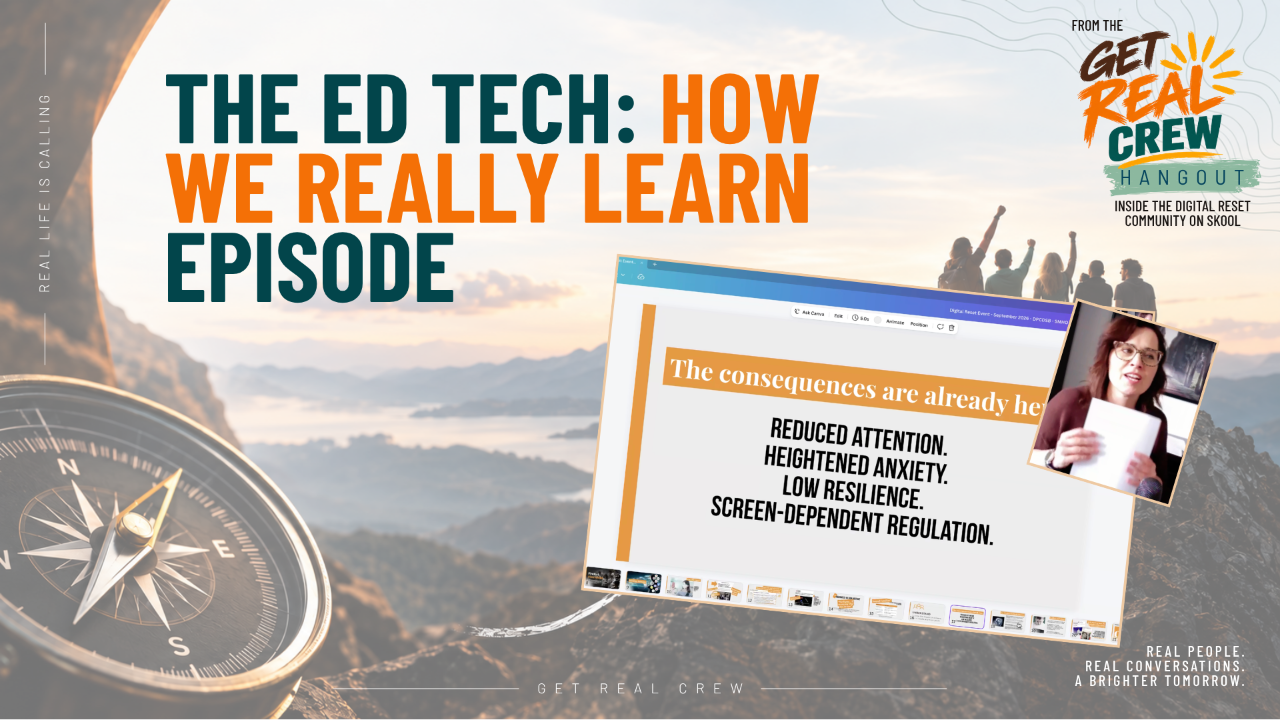
- Shorter attention spans. Kids who are used to fast, constant stimulation struggle to stay with a book, a lesson or a conversation.
- More anxiety. Constant comparison, pressure to be always available and the fear of missing out take a real toll.
- Screen-dependent regulation. Many kids now reach for a device the moment they feel bored, upset or overwhelmed. The screen becomes the way they calm down, and they never get the chance to build that skill on their own.
That last one is the one I want every parent to understand. When a screen does the calming, a child's own ability to cope doesn't get the practice it needs to grow.
You are the protective barrier
Here's the good news. As parents, we have more power than we think. We can be the barrier between our kids and technology that wasn't designed with their wellbeing in mind.
That doesn't start with taking things away. It starts with building up the offline skills that screens can't give them:
- Face-to-face conversation. Eye contact, reading facial expressions, waiting your turn to speak, working through a disagreement in real time.
- Vocabulary. Kids build language by talking, listening and reading with real people. Dinner table conversations matter more than ever.
- Physical movement. Bodies are meant to move. Outdoor play, sports and simply being active help kids regulate their emotions and sleep better.
Every hour spent building these skills is an hour of childhood we're taking back.
AI is moving into the relational space
This is the part of the conversation that keeps me up at night. Social media changed how kids connect with each other. AI is changing who, or what, they connect with.
AI is no longer just a homework helper or a search tool. It's stepping into the space where human relationships used to live. Chatbots and AI companions are being designed to act like friends, confidants, even romantic partners. They're always available, always agreeable and always focused on your child.
These are synthetic companions. They mimic the feeling of a relationship without any of the real give-and-take. For a lonely or anxious kid, that can feel safer than a real friendship. And that's exactly what makes it so risky.
The phone in the bedroom
If you take one thing from this post, let it be this: many teens keep their phones with them while they sleep.
That means notifications at midnight, scrolling at 2 a.m. and a brain that never fully switches off. Sleep is when kids grow, process their emotions and recharge for the next day. When the phone is in the bedroom, all of that suffers, and so does their mental health.
This is one of the simplest changes a family can make, and one of the most powerful. Phones charge outside the bedroom. Get a simple alarm clock and you're all set. No excuses. Every night. For everyone, parents can be included too.
Parents are asking
How can parents limit AI screen time?
Start by knowing where AI already lives in your child's world. It's not just chatbot apps. It's built into social media, games, search engines, school tools and even smart speakers. You can't set limits on something you haven't spotted.
Then put a few clear guardrails in place:
- Keep AI in shared spaces. Homework help happens at the kitchen table, not behind a closed bedroom door.
- Give AI a job, not a relationship. It can help explain a math problem. It shouldn't be the one your child talks to about their day or their feelings.
- Turn off companion features. Many apps now have built-in AI chat "friends." Check the settings together and switch them off.
- Set device-free times and zones. Meals, car rides and bedrooms stay screen-free, and AI is part of that.
- Talk about it. Ask your kids which AI tools they use and what they use them for. Stay curious, not panicked. Kids who feel judged stop telling you things.
What are the signs of screen-dependent regulation?
Screen-dependent regulation means a child relies on a device to manage their emotions instead of their own coping skills. Watch for these signs:
- Meltdowns, anger or panic when a device is taken away or the time is up
- Reaching for a screen the moment they feel bored, sad, nervous or frustrated
- Struggling to calm down without a device, even after a small upset
- Needing a screen to fall asleep, eat a meal or get through a car ride
- Losing interest in activities that used to bring them joy
- Restlessness or irritability during quiet, screen-free moments
If you're seeing these, you're not alone, and it's not too late. Start small. Swap one screen moment a day for a calming activity you do together, like a walk, a snack and a chat, or some music. Name the feeling out loud with them, and let them practise riding it out. Their coping muscles grow every time they get to use them.
How do synthetic companions affect social skills?
Real relationships are messy, and that's what makes them so valuable. Friends disagree, misunderstand each other, have bad days and need to make up. Every one of those moments teaches kids patience, empathy, compromise and how to repair a relationship.
Synthetic companions skip all of that. An AI companion is always available, always agrees and never needs anything back. Here's what that can do over time:
- Fewer chances to practise. Every hour spent talking to an AI is an hour not spent learning to read a real face or handle a real conversation.
- Unrealistic expectations. If a "friend" is always perfect, real people start to feel disappointing and hard work.
- More isolation. For a kid who is already lonely or anxious, an AI companion can feel easier than reaching out, which keeps them from building the real connections they need.
- Less resilience. Kids who never face friction in relationships don't learn how to bounce back from it.
The answer isn't fear. It's connection. Make sure your kids have plenty of chances for real friendships, real conversations and real belonging, at home, at school and in the community. The best protection against a synthetic relationship is a rich, real one.
Let's get real together,
Lucy
Lucy Colangelo, the "Get Real" Digital Reset Mom 25-year marketing insider turned digital parenting advocate and creator of the Total Digital Reset. shineonmethod.com
Choose your next step
Wherever you are on this journey, there's a place to keep going. Pick the one that fits you best.
If you're ready to make real changes at home... The Total Digital Reset Course walks you step by step through understanding the problem, protecting your kids and resetting your family's relationship with screens. It's the clearest path from worried to confident. [Start the Total Digital Reset]
If you want support from parents who get it... Join the Digital Reset Community, where parents share what's working, ask questions and cheer each other on. You don't have to figure this out by yourself. [Join the community]
If you want your school, parent council or workplace to hear this... I bring the Screen Time Reset presentation to schools, parent councils and organizations. It gives parents and staff the full picture and practical tools they can use right away. [Book me to speak]
If your child needs help finding their spark offline... ShineOn Student Success Coaching helps young people build a strong sense of who they are and what they care about, so screens have less pull. [Learn about coaching]